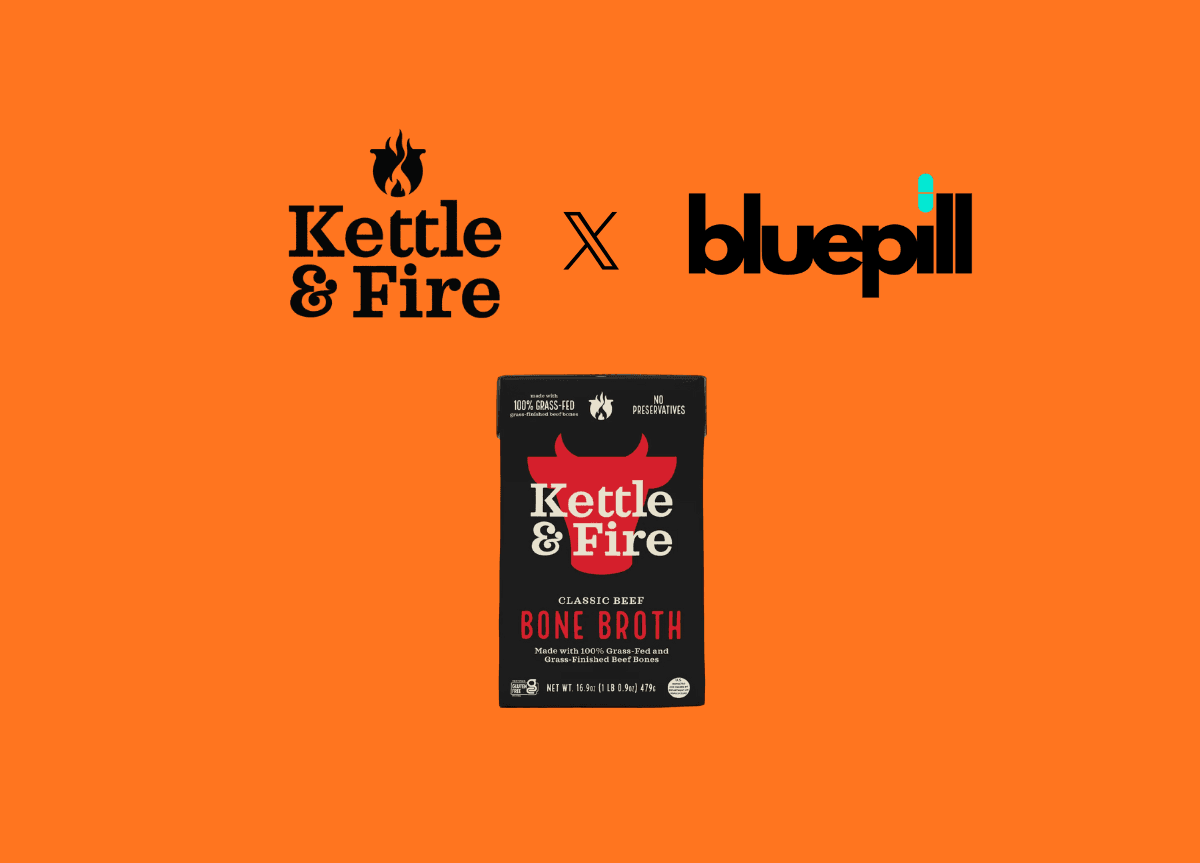
Bluepill Case study | Kettle & Fire
The Goal
01
AI-Powered First & Second Impression Testing
BluePill simulated real consumer first-glance and closer-look reactions to the new packaging, capturing immediate product identification, perceived use cases, and confidence signals—mirroring how shoppers actually scan shelves.
02
Usage Occasion & Mental Availability Mapping
Using AI real world data and consumer simulations, BluePill surfaced the cooking occasions, meal contexts, and versatility cues consumers naturally associate with the packaging—revealing whether the design expanded or constrained perceived usage.
03
Naming Preference & Decision Logic Validation
BluePill tested alternative naming conventions head-to-head, uncovering not just preference rankings, but the underlying decision logic—clarity, familiarity, and ease of shopping—that drives choice at shelf.
Time to insights.
Match to real human data
Investments.
Average Accuracy
Rank Order Alignment
Speed
Cost
Versatility, a major driver
Versatility is a major driver, as shoppers see the product as a base for multiple meals and cooking styles.
Clear & direct labeling
Clear, direct labeling increases confidence, helping consumers quickly understand use cases and benefits.
Naming conventions
Naming conventions meaningfully affect preference, with shoppers favoring terminology that feels familiar, efficient, and easy to shop for.
Conclusion
BluePill helped Kettle & Fire rapidly validate packaging and naming decisions with unprecedented speed, accuracy, and efficiency.