Persona-based marketing with AI; how synthetic personas transform market research, helping brands test products and messaging across segments faster.

Marketing has always been about understanding people. “Customer is king” may sound cliché, but it holds true – businesses that deeply understand and prioritize their customers tend to outperform those that don’t. This is the core idea behind persona-based marketing, a strategy where all marketing efforts are centered around well-defined buyer personas. Now, thanks to advances in artificial intelligence, marketers have a powerful new tool to understand their audience better than ever: AI-generated synthetic personas. These virtual customers can mimic real consumer behavior, allowing marketers to conduct rapid market research and refine strategies with unprecedented speed and precision. In this detailed guide, we’ll explore what persona-based marketing means today and how synthetic personas are transforming market research in industries like CPG, media & entertainment, and advocacy.
What is Persona-Based Marketing (and Why Does It Matter)?
Persona-based marketing (often abbreviated PBM) is a technique where you focus all your marketing activities around specific buyer personas. A buyer persona is a semi-fictional representation of your ideal customer, built on real data and research. Personas encapsulate key traits of your target audience – their demographics, interests, motivations, pain points, goals, and buying behaviors. Instead of viewing your market as a faceless mass, you market to “people” with names, backgrounds, and personalities (even if they are fictional composites).
Why take a persona-centric approach? Because it puts the customer’s needs and perspective at the forefront of every campaign. By understanding who your customers are and what they care about, you can tailor content, products, and services to fit them – rather than taking a one-size-fits-all approach. This makes your marketing more relevant and relatable. In fact, companies that truly embrace their customers’ perspective often see significant improvements in marketing performance. When messages resonate with specific needs or preferences, the results speak for themselves: better engagement, higher click-through rates and email open rates, more effective ad targeting, higher conversion rates, and ultimately increased revenue. In short, persona-based marketing helps ensure that what you communicate and how you communicate it aligns perfectly with the people you’re trying to reach.
Traditionally, marketers create personas by researching and analyzing their customer data, conducting surveys or interviews, and perhaps even running focus groups. They might end up with persona profiles like “Health-Conscious Hannah”, a 32-year-old urban professional who values organic ingredients and convenience, or “Budget-Savvy Sam”, a price-sensitive dad of two who seeks value deals. With clear personas in hand, marketing teams can brainstorm ideas and make strategic decisions through the lens of these personas. For example, an email campaign might be tweaked to speak in Hannah’s language about wellness benefits, while a landing page might highlight cost savings to appeal to Sam. This approach takes a lot of the guesswork out of marketing, because you’re always asking: “Would this message/product/offer appeal to my persona?” If not, you go back to the drawing board.
The effectiveness of persona-based marketing is well-established, but it does come with challenges. Building detailed personas and keeping them up-to-date requires significant research. Markets and consumer behaviors change, so personas can become stale if not refreshed with new data. Moreover, validating your marketing ideas (like a new product concept or ad campaign) with real customers traditionally takes a lot of time and money. This is where AI is now stepping in to supercharge the process, giving rise to a new frontier: AI-driven market research using synthetic personas.
Enter AI and Synthetic Personas: A New Frontier in Market Research
Imagine having a focus group of hundreds of ideal customers available on-demand, 24/7, ready to give you feedback on any idea at a moment’s notice. Synthetic personas promise something close to that. A synthetic persona is essentially a virtual consumer generated by AI, designed to represent a real segment of your audience with uncanny accuracy. These AI personas are built using real-world data – everything from demographic info and purchasing behavior to social media patterns and survey responses – and powered by advanced machine learning and language models. In simpler terms, a synthetic persona is like a digital twin of your customer, created from millions of data points to think and act like a real person in your target market.
Unlike a traditional persona (which might live in a PowerPoint slide or a document), a synthetic persona is interactive and dynamic. You can actually “talk” to these AI personas or put questions to them, and they will respond in natural language as if they were a real customer. This is possible because AI models today (like large language models) can be trained or prompted to adopt the persona of a given customer profile. For example, you could feed the AI a detailed profile of Health-Conscious Hannah – including her age, background, interests, and even prior purchase history – and the AI will simulate Hannah. Ask “Hannah” what she thinks of a new low-sugar product formulation or how she’d respond to a particular ad tagline, and the synthetic Hannah will answer with opinions and reasoning that a health-conscious consumer might genuinely have. It’s as if you cloned your customer persona and can now have a direct conversation to probe her thoughts.
This might sound a bit like science fiction, but it’s quickly becoming science fact. Brands are already using AI persona generators and large language model tools to create virtual user panels for research. These synthetic users can take surveys, react to marketing materials, and even participate in AI-driven interviews or focus groups. The advantage is huge: you get instant feedback without needing to recruit actual people for every test. Traditional consumer research – with its weeks-long schedules, hefty costs, and logistical hurdles – simply can’t keep up with the pace of modern marketing. By the time you’ve gathered a live focus group, run the study, and analyzed results, the market may have moved on or a competitor might have launched something new. Synthetic personas dramatically accelerate this feedback loop.
It’s important to note that synthetic personas aren’t meant to completely replace real human insight. Rather, they augment and scale your research capabilities. They help overcome bottlenecks in data collection by simulating consumer responses when real data is sparse or too slow to obtain. Of course, the accuracy of an AI persona depends on the quality of data and modeling behind it. The best AI personas are rigorously trained on rich datasets and are continuously validated by comparing their predictions to actual human results. In fact, cutting-edge AI consumer platforms report that their virtual personas’ answers align with real consumer panels over 90% of the time – and whenever discrepancies arise, the models get refined. This kind of validation (humans “in the loop”) ensures that marketers can trust insights from synthetic personas as a strong proxy for reality.
Why Synthetic Personas Give Marketers a Strategic Edge
In a world where marketing agility is a competitive advantage, synthetic personas are a game-changer for several reasons. They address many pain points that marketers and researchers have struggled with for years. Here are some key benefits of using AI-driven synthetic personas in market research and marketing strategy:
Speed of Insights: What used to take weeks of surveys or interviews can now happen in hours or even minutes. Need to gauge reactions to a new product concept overnight? AI personas can deliver quick feedback, allowing you to make fast, data-informed decisions and keep up with rapid market changes.
Cost Efficiency: Traditional focus groups and consumer research studies can cost tens of thousands of dollars. Synthetic persona research, by contrast, is far more cost-effective. Once the AI models are set up, running additional tests or conversations incurs minimal incremental cost – no travel, venue, or participant incentives required. This makes thorough research accessible even for smaller teams or campaigns with tight budgets.
Scalability and Sample Size: Human research is often limited to small sample sizes – a focus group of 20 people or a survey of a few hundred respondents. AI personas can be scaled to simulate thousands of consumers at once. You can generate a whole panel of diverse personas covering different segments and run large-scale simulations. This scalability means more representative data and the ability to explore niche audience segments that might be hard to reach in real life.
Depth of Insight: Because synthetic personas are derived from vast datasets and can tap into patterns across millions of data points, they often reveal deeper behavioral insights. They can help answer the “why” behind consumer actions by analyzing patterns in ways a human researcher might miss. For example, an AI persona might highlight that a certain target segment prefers one product feature over another due to a subtle lifestyle factor, which could inform a compelling marketing angle.
Consistency and 24/7 Availability: AI personas don’t get tired, bored, or biased by the last conversation they had. They give consistent responses based on the data they were built on. And they’re always on – you can run tests during a late-night brainstorming session or multiple iterations back-to-back. There’s no need to schedule around participants’ calendars or worry about survey fatigue.
Ethical and Privacy-Friendly Research: This might not be immediately obvious, but synthetic personas can help navigate privacy concerns in research. Since they are aggregated, anonymized representations of real data, you’re not probing one individual’s personal life or sensitive info. You’re essentially asking questions to a data-driven avatar. This can reduce the need to collect additional personal data from real users and sidestep issues like respondent privacy or survey fatigue, all while still gaining meaningful insights.
In sum, synthetic personas empower marketers to test, learn, and iterate much faster and more frequently. When you remove the traditional friction of research, you can afford to be far more experimental and proactive. Marketing teams can validate assumptions early, try bolder ideas (because failure in a simulation is cheap), and optimize campaigns before they go live, saving a lot of trial-and-error in market. It’s like having a cheat code for consumer understanding – one that lets you peek into customers’ minds in advance.
Using AI Personas Strategically in Your Marketing
How can marketers actually leverage synthetic personas in day-to-day strategy? The possibilities are broad, but they all boil down to integrating these AI “customers” into your decision-making process. Here are some strategic ways to use AI-driven personas in marketing and product development:
Concept Testing and Product Development: Before investing in developing a new product or feature, run the idea by your AI personas. Whether it’s a new flavor for a beverage, a cosmetic product, or a mobile app feature, you can simulate consumer reactions early on. Ask your synthetic panel “Would you be interested in this? Why or why not? What would you improve?”. Their feedback can guide tweaks to the concept or help you decide if it’s worth pursuing at all. This is incredibly useful in industries like Consumer Packaged Goods (CPG), where launching the wrong flavor or packaging can be a costly mistake – more on that shortly.
Message Refinement and Creative Optimization: Marketing is as much about how you say something as what you’re offering. AI personas can help you fine-tune messaging, slogans, ad copy, and creative assets. For example, you might test two different ad headlines on a synthetic persona that represents your target demographic to see which one resonates more. You could even have the AI persona explain its preference (“Headline A feels too technical, Headline B speaks to me emotionally”). Similarly, you can have personas rank different visuals or ad designs. This acts like a virtual A/B testing lab where you get qualitative reasoning in addition to quantitative preference.
Personalization at Scale: If you have multiple customer segments, synthetic personas enable you to personalize strategies for each one without guesswork. Perhaps you have one persona for tech-savvy Gen Z shoppers and another for busy Gen X parents. By querying each AI persona, you can derive different marketing approaches appropriate for each group – maybe the Gen Z persona responds better to an informal, meme-inspired tone on social media, while the Gen X persona prefers a straightforward, informative style via email. With these insights, you can craft segmented campaigns that truly feel tailored to each audience, boosting engagement.
Customer Journey Mapping and Pain Point Analysis: You can walk through the customer journey with an AI persona to identify friction points. Ask your synthetic persona how they discover products like yours, what might stop them from trying it, or what would convince them to become loyal. Their answers can shed light on barriers and opportunities at each stage of the funnel, from awareness to consideration to retention. For instance, a persona might reveal that they often want to see reviews and social proof before buying – highlighting the need to feature testimonials or influencer endorsements in your campaign.
Always-On Focus Groups for Brainstorming: Consider involving synthetic personas in your creative brainstorming sessions. This might sound wild, but imagine during a marketing team meeting, someone says “Let’s ask our AI personas what they think about this idea.” Within minutes, you could get perspectives from “consumers” themselves. It’s like having a customer advocate present in every meeting. Their input can validate ideas or spark new ones that align better with customer desires. This approach keeps your strategy grounded in customer insight continually, not just at the outset of a project.
Risk Mitigation and Crisis Simulation: Apart from positive feedback, AI personas can help anticipate negative reactions or misunderstandings. You could test if any planned advertisement or statement might inadvertently offend or alienate a segment by seeing how a persona reacts. If the synthetic persona responds with confusion or a negative sentiment, that could be a red flag to rephrase a message or rethink a promotion before it goes live. This kind of foresight is valuable in advocacy and public relations, where messaging can be sensitive.
Overall, using synthetic personas strategically means treating them as an extension of your marketing team. They’re your instant insight generators, ready to weigh in on decisions big and small. However, it’s also crucial to use them wisely. Remember that these AI personas are tools to enhance human judgment, not replace it. The best outcomes come when marketers combine AI-driven findings with their own expertise and empathy. If an AI persona tells you something unexpected about your customers, take it as a hypothesis and see if it makes sense in context or perhaps validate it with a quick real-world check. Often, the AI will be right (or at least directionally insightful), but your human understanding of nuance and brand values is the final filter.
Now, to make this even more concrete, let’s look at how synthetic persona-based research is being applied in a few key industries.
Industry Applications: AI Personas in Action
Different industries have started to tap into AI-generated personas for insights, each with its own twist. Here we’ll explore three areas – Consumer Packaged Goods, Media & Entertainment, and Advocacy/Nonprofits – to see how this technology can be used to address industry-specific challenges.
Consumer Packaged Goods (CPG)
The CPG industry thrives on understanding fast-changing consumer preferences. Whether you’re marketing snacks, beverages, skincare, or household products, success often hinges on hitting the right note with consumers’ tastes and needs. Traditionally, CPG companies rely on extensive market research: taste tests, in-store trials, package design surveys, etc. These methods are effective but can be painfully slow. AI synthetic personas offer a faster way to get into consumers’ heads.
Consider a scenario in CPG: a company wants to launch a new flavored sparkling water. Instead of rolling it out and hoping for the best (or spending months on nationwide surveys), the brand can create synthetic personas representing different customer segments – say, “Fitness Fiona” (a health-conscious 25-year-old who avoids sugary drinks) and “Adventure Alex” (a trend-seeking 30-year-old always looking for novel flavors). The company can then ask these personas questions: Would you try a cucumber-mint flavored water? What kind of packaging catches your eye? Do you prefer bold branding or a clean, minimalist look for a beverage? The AI consumers might reveal, for instance, that Fiona loves the idea of a refreshing cucumber-mint flavor and values seeing electrolyte info on the label, whereas Alex might say they’re drawn to unique flavor names and edgy designs for the can. This immediate feedback helps the marketing team refine the product and its positioning before a single real bottle hits the shelves.
In practice, CPG companies have used AI-driven consumer simulations to test things like new product concepts, package designs, flavor preferences, marketing claims, and pricing strategies. The insights allow them to iterate quickly. One food brand, for example, used AI personas to evaluate how customers perceive the clarity of their packaging labels – discovering that a more minimal label outperformed a text-heavy one for comprehension. Another tested multiple new snack flavor ideas in a day by seeing which flavor descriptions resonated most with different persona profiles. What’s exciting is that these virtual taste-tests and concept trials can be done at a fraction of the cost of a physical test market or large survey. It empowers even smaller CPG brands to be data-driven and consumer-centric in their product development and marketing, leveling the playing field with bigger players.
Media & Entertainment
Media and entertainment companies – from streaming services and movie studios to sports teams and event organizers – are all vying for audience attention in a crowded landscape. Understanding what content will engage an audience (and how they’ll react to storylines, characters, marketing promotions, etc.) is a bit of an art mixed with science. Synthetic personas can tilt that balance more towards science by offering predictive audience insights.
Take the example of a streaming platform developing a new original series. They have a few different concept trailers and marketing angles but aren’t sure which will hit home for their core audience. Instead of a limited pilot focus group, they could deploy AI personas representing their subscriber base – perhaps a persona for “Horror Fan”, another for “Comedy Lover”, and one for “Casual Viewer”. Show each persona the trailer (yes, AI can evaluate video content too by analyzing frames and script themes) or describe the series premise, then ask for reactions. The Horror Fan persona might respond enthusiastically to the darker, suspenseful trailer but show disinterest in a more comedic promo, whereas the Comedy Lover persona predictably tilts the other way. Meanwhile, the Casual Viewer AI persona could indicate whether the concept has broad appeal or if it’s too niche. These insights guide the studio on which creative direction to emphasize in marketing, and even hint at how different segments of viewers might rate or review the show.
In the realm of sports and live entertainment, synthetic personas can simulate fan reactions to changes in the experience. A sports team (like a baseball franchise) could use AI fan personas to test a new stadium feature or promotional campaign. For instance, “Dedicated Season Ticket Holder” persona might be asked how they feel about dynamic ticket pricing or a new mobile app for concessions, revealing any frustrations or excitement. A more casual fan persona might be probed about what would entice them to attend more games – cheaper family packages or new on-field entertainment? By anticipating these reactions, the team’s marketing and operations departments can make fan-centric decisions and avoid backlash. In fact, some forward-thinking teams have started collaborating with AI insight platforms to simulate fan behavior at scale, so they can create more engaging and successful fan experiences.
For the broader media industry, AI personas can assist with content personalization strategies as well. If you know how different audience segments (personified through AI) respond to various content types or headlines, you can better tailor what you show them. News outlets could simulate reader personas (like “Tech Enthusiast” vs. “Lifestyle Reader”) to decide which articles to recommend or what tone to use in notifications. The entertainment world is discovering that you no longer have to entirely rely on post-release data to understand audience engagement – you can get pre-release feedback and make adjustments proactively.
Advocacy and Nonprofits
Advocacy groups, nonprofits, and political campaigns might not sell products like CPG companies, but they are certainly “marketing” ideas, causes, and calls-to-action. Success in these sectors often comes down to how effectively you can persuade and mobilize people – whether it’s donating to a cause, voting for a candidate, or changing personal behavior for a social good. AI synthetic personas can be a secret weapon here, offering insight into how different groups might respond to your messaging or initiatives.
One of the biggest challenges in advocacy is messaging: finding the right words and emotional appeal that will resonate with your target demographic without alienating others. Let’s say a climate advocacy nonprofit is planning a new campaign to encourage eco-friendly habits. They could develop a few different slogan options and campaign posters, then consult synthetic personas that represent key audience segments. For example, an AI persona for “Young Urban Activist” (a twenty-something who is already climate-conscious and active on social media) might prefer messaging that is bold and urgent, highlighting collective action and systemic change. Meanwhile, another persona like “Busy Suburban Parent” (who cares about the environment but is juggling work and family) might respond better to a more practical message about how eco-friendly choices can also save money or improve kids’ health. By interviewing these personas – essentially asking “Would this message inspire you to take action? What worries or excites you about this initiative?” – the advocacy group can refine their approach. They might discover, for instance, that the Busy Parent persona feels guilty about not doing enough, so a positive, guilt-free message (“every little step counts”) triggers a more receptive reaction than a doom-and-gloom tone.
Political campaigns can similarly benefit. Campaign strategists often segment voters and tailor messages, a practice that traditionally involves extensive polling. AI voter personas can simulate how different voter segments (say, rural undecided voters, or young progressive voters) respond to various policy messages or attack ads. By analyzing these simulated responses, a campaign might adjust its talking points or identify which issues to emphasize to win over a particular group. It’s like running infinite “what-if” scenarios with a virtual electorate before committing to a strategy in the real world. Moreover, synthetic personas in advocacy can help test for messaging pitfalls – for example, whether a certain phrase is misunderstood or if an image inadvertently offends part of the audience – thus avoiding costly PR missteps.
For nonprofits that operate on tight budgets, the cost-saving aspect of synthetic research is a huge plus. They can gather insight without the expense of large surveys. And because AI personas are scalable, even small organizations can get input that represents a wide audience base (national or global) which would be impossible through their own limited outreach. This helps level up their campaigns with data-driven precision similar to what big-budget organizations use.
Best Practices and Considerations for Using Synthetic Personas
As exciting as synthetic personas are, using them effectively requires some thoughtful practice. Here are a few tips to ensure you get the most out of AI-driven persona research:
Start with Quality Data: The mantra “garbage in, garbage out” applies here. Your synthetic personas will only be as accurate as the data used to create them. Make sure you’re feeding your AI models with reliable, up-to-date customer data. This could be data from your CRM, website analytics, surveys, or third-party consumer research. If you’re using a platform that provides pre-built AI audiences, ask about how they construct those personas (e.g., do they use real survey data, behavioral data, etc.). The more closely the AI persona’s “training” data matches your actual target audience, the more trustworthy its responses.
Define Clear Persona Profiles: Just as you would carefully craft a traditional persona, give your synthetic persona a well-defined profile. Include key demographic traits (age, location, income range if relevant), personality or attitudinal traits (e.g. “values innovation”, “risk-averse”), and any relevant behavioral context (e.g. “shops online twice a week”, “watches 3 hours of streaming content daily”). This profile serves as the prompt or starting point for the AI. A clear persona profile ensures that the AI’s responses stay in-character and realistic. If you’re using an AI persona tool, spend time refining the persona parameters – it’s worth the effort.
Ask the Right Questions (and Probe Further): The quality of insight you get is tied to the questions you ask. Frame questions to your AI personas just as you would in a well-run interview with a real person. Instead of very general questions (“Do you like this product?” which might yield a shallow yes/no), ask open-ended questions: “What do you like or dislike about this product concept and why?” or “How would you compare this new feature to what you currently use?”. The beauty of AI personas is that you can probe further instantly – if you get an interesting answer, you can follow up with “Can you explain why you feel that way?” or “What would change your mind?” to dig into motivations. This iterative Q&A approach can uncover golden insights that a standard survey might miss.
Combine Quantitative and Qualitative Feedback: Synthetic research can give you both numbers and narratives. For instance, you might run a simulated survey with 500 AI persona instances to get quantitative results (like 68% preference for Concept A over Concept B). At the same time, you can ask a few of those personas to explain their choices, providing qualitative color (“Concept A fits better with my busy lifestyle because….”). Use both types of feedback together. The stats can tell you what the majority opinion is, and the AI persona commentary can help you understand why that opinion trends that way. This combination is incredibly powerful for decision-making.
Validate with Reality When Possible: While top-tier synthetic persona systems are impressively accurate, it’s still wise to double-check critical findings with some real-world data when you can. Think of synthetic personas as leading indicators. If an AI persona simulation strongly suggests a certain ad campaign will be a hit with your audience, consider doing a small-scale live test or releasing a teaser to measure actual response. More often than not, the AI will be right (especially if it’s a validated platform), but having that real confirmation can give you confidence, especially for high-stakes decisions. Over time, as you see the AI personas predict correctly again and again, you’ll trust them more.
Maintain Ethical Use and Avoid Over-Reliance: Use synthetic personas ethically. They should complement an understanding of your real customers, not substitute for genuine engagement. Always remember there are nuances, emotions, and unpredictable elements in human behavior that no AI can fully capture. So, avoid the trap of treating AI outputs as infallible truth. They are estimates and simulations. Also be transparent within your team (and to clients or stakeholders, if you’re an agency) that these insights are AI-generated. When presented properly, most stakeholders will appreciate the innovative approach, especially if you underscore that it’s backed by validation and expert interpretation.
Following these best practices will help ensure that your adventures with AI-driven persona marketing are successful and grounded. Now, let’s wrap up by reflecting on the big picture of what this means for marketing.
Conclusion: Embracing the Future of Persona-Driven Marketing
Persona-based marketing has always been about one thing at its heart: keeping the customer front and center. That principle isn’t changing – if anything, AI is enabling us to honor that principle on a much greater scale. By leveraging synthetic personas and AI-driven market research, marketers can infuse real customer insight into every stage of their strategy faster than ever before. It’s like having a superpower where you can instantly gather the collective voice of your consumers and let it guide your decisions.
For industries like CPG, media & entertainment, and advocacy, which we highlighted, this AI-powered approach is already proving its worth. Brands are cutting down go-to-market research times from months to days, creative teams are gaining confidence that their big campaign ideas will connect, and organizations championing causes are finding messages that truly move hearts and minds. All of this is happening because behind the scenes, virtual customers are working alongside human marketers – a collaboration of human creativity and machine intelligence.
As we embrace this future, it’s important to remember that successful marketing will always require a human touch. AI can provide the data-driven foundation and free up time by automating research drudgery, but human marketers still shine in asking the right questions, interpreting context, and crafting empathetic stories that resonate. Think of synthetic personas as an incredibly smart assistant: they hand you insightful information on a silver platter, but it’s up to you to weave that into an effective marketing narrative.
In conclusion, AI-driven synthetic personas represent a significant evolution of persona-based marketing. They let you step into your customer’s shoes in a way that’s never been possible at scale before. Marketers who take advantage of this technology are positioning themselves to create more customer-centric, evidence-backed, and successful campaigns. In the fast-paced world of modern marketing, those who understand their audience best – and act on that understanding quickly – will win. By blending the timeless wisdom of “know your customer” with cutting-edge AI tools, you’re not just keeping up with the marketing game; you’re redefining how the game is played. The age of AI personas is here, and it’s an exciting time to be a marketer who champions the customer above all.
Related Blogs
May 29, 2026
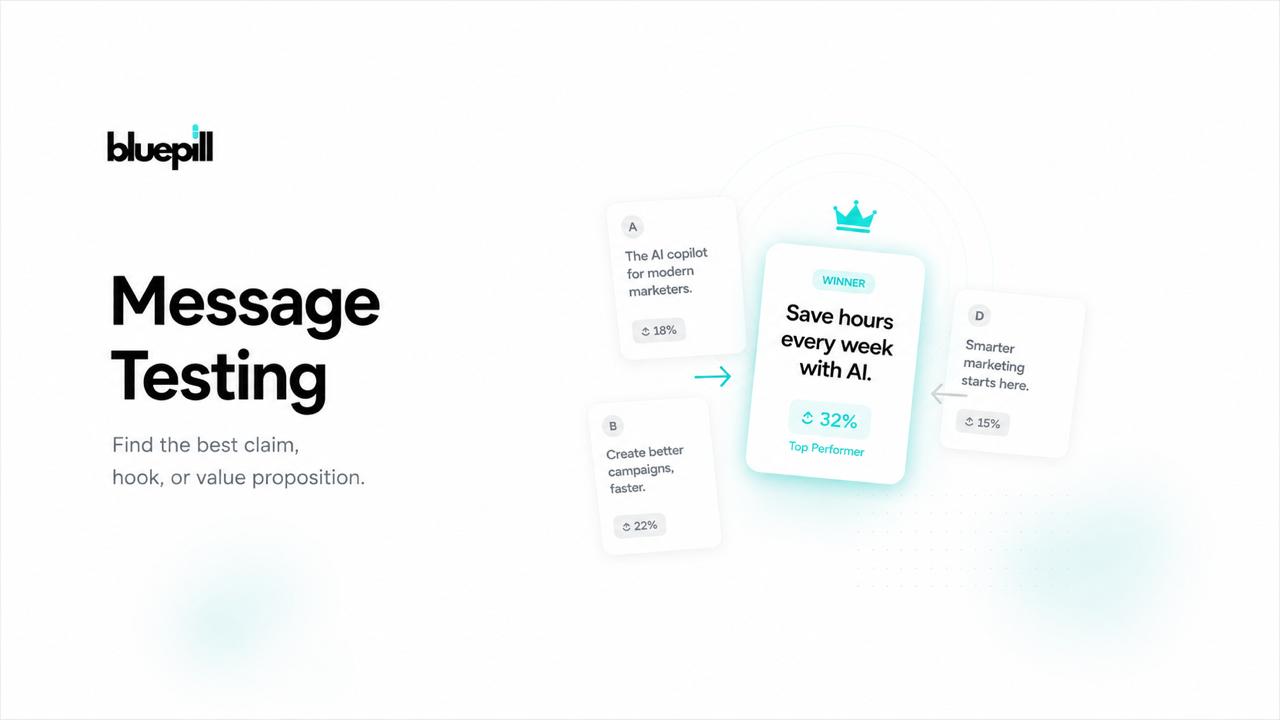
Message Testing: How to Find the Best Claim, Hook, or Value Proposition
May 29, 2026
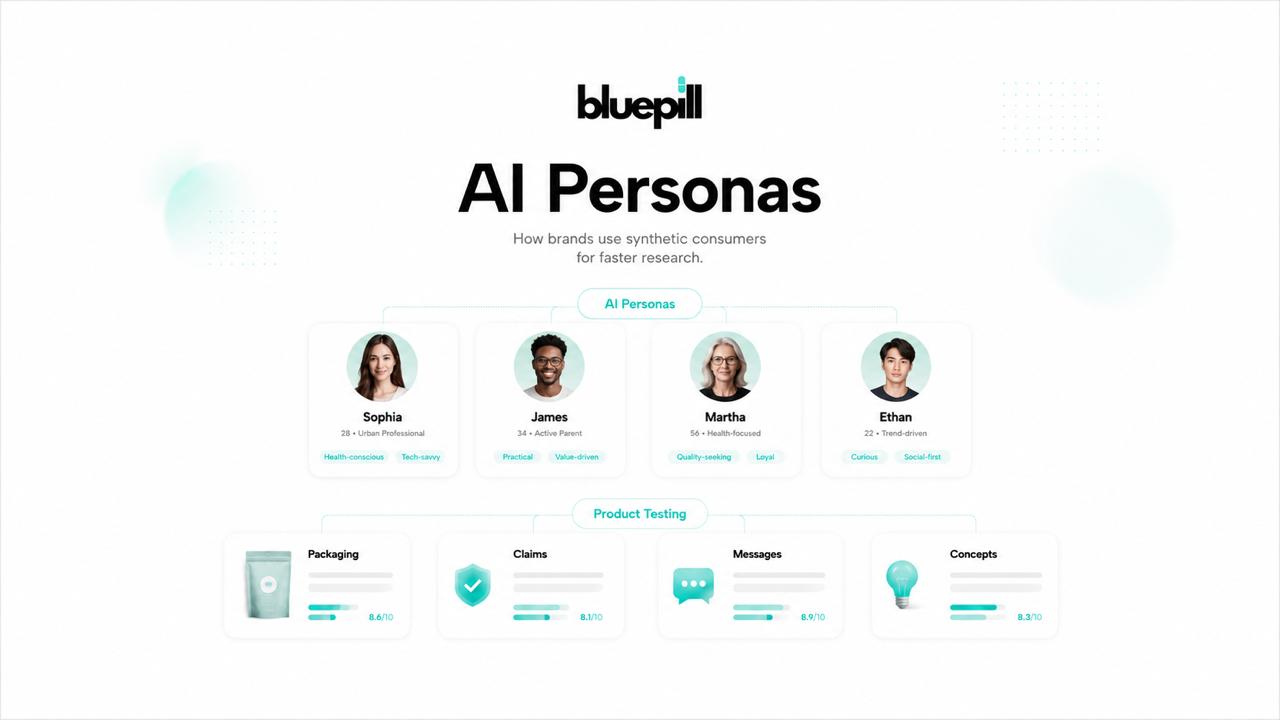
AI Personas: How Brands Use Synthetic Consumers for Faster Research

May 29, 2026
Advertising Market Research: How to Validate Ads Before Launch
May 29, 2026