
Every product launch has a moment of quiet uncertainty before it goes live.
The roadmap is nearly finished. The landing page is drafted. The team feels momentum. And yet, beneath the confidence, there’s a question no one wants to slow down long enough to ask:
Do we actually understand how the market will respond to this?
This question sits at the heart of pre-launch market research, and it’s the difference between a launch that learns quickly and one that stumbles publicly.
That assumption quietly breaks down the moment you look at who is actually taking the biggest risks before launch today.
It’s ecommerce brands rolling out new product lines into crowded catalogs.
It’s healthtech teams introducing patient-facing tools where trust matters more than features.
It’s CPG companies betting shelf space and distribution on untested positioning.
It’s sports organizations, media companies, and advocacy groups trying to shape perception, not just clicks.
Across industries, the stakes before launch are high—and the cost of getting the market wrong compounds quickly.
The Shared Risk Across Industries Before Launch
Whether you’re launching a DTC product, a health platform, a media property, or a public-facing campaign, the pre-launch question is the same:
How will real people actually interpret this once it leaves our control?
Internally, ideas always sound clear.
Externally, markets are messy, distracted, skeptical, and overloaded with options.
In ecommerce and CPG, that gap shows up when customers don’t understand differentiation.
In healthtech, it appears as hesitation, mistrust, or drop-off after initial interest.
In sports and media, it surfaces as weak engagement despite strong reach.
In advocacy and communications, it looks like messages that get seen—but fail to move opinion.
Pre-launch market research exists to surface that gap before it becomes visible at scale.
Why Pre-Launch Research Fails When It’s Treated as “Feedback”
Many teams do some form of research before launch—but still miss the mark.
That’s because they’re often asking for opinions, not observing decision-making.
People will tell a CPG brand that packaging looks “nice.”
They’ll tell a healthtech product that the idea “sounds useful.”
They’ll tell a media team that the concept is “interesting.”
None of those statements predict adoption.
What matters is how people reason privately:
What assumptions they bring
What they don’t trust
What feels risky, confusing, or unnecessary
What makes them hesitate even when the problem is real
Strong pre-launch market research is about revealing those internal reactions - not collecting polite responses.
The Reality of Pre-Launch Decisions in Modern Markets
Markets today behave very differently than they did even a few years ago.
Consumers are faster to judge and slower to commit.
Audiences are more aware of persuasion tactics.
Trust is earned late, not early.
In ecommerce, shoppers compare instantly and abandon without explanation.
In healthtech, users look for reasons not to believe.
In media and sports, attention doesn’t equal loyalty.
In advocacy and communications, resonance matters more than reach.
Launching without understanding these behaviors isn’t bold—it’s blind.
How AI Market Research Fits Modern Industry Needs
This is where platforms like Blue-Pill.ai fit naturally across industries.
Instead of relying solely on live interviews or surveys, teams can simulate how different audience segments process a message, a product, or a narrative.
For an ecommerce or CPG brand, that might mean understanding what truly drives switching behavior.
For healthtech, it means stress-testing trust, clarity, and perceived risk.
For sports and media, it means seeing where engagement breaks down before launch.
For advocacy and communications, it means identifying which messages persuade—and which trigger resistance.
The value isn’t prediction.
It’s exposure to how real people think through a decision when no one is watching.
Pre-Launch Research as Risk Management, Not Validation
Across industries, the most successful teams don’t use pre-launch market research to prove they’re right.
They use it to identify where they might be wrong.
They’re willing to hear:
“I don’t get this”
“This feels like extra effort”
“I’d probably ignore this”
“I don’t trust this yet”
Those reactions don’t kill launches.
Ignoring them does.
When research is treated as learning - not validation - it sharpens positioning, simplifies messaging, and reduces wasted spend after launch.
What Changes When Research Is Done Well
When pre-launch market research is done properly, launches feel calmer.
Not because success is guaranteed - but because surprises are fewer.
Teams know which audiences will respond first.
They know where objections will appear.
They know which messages will land—and which won’t.
In ecommerce, that means fewer abandoned carts driven by confusion.
In healthtech, it means stronger early trust signals.
In CPG, it means clearer shelf and brand storytelling.
In media, sports, and advocacy, it means messages that actually move people - not just reach them.
The True Purpose of Pre-Launch Market Research
Pre-launch market research doesn’t exist to slow teams down.
It exists to prevent expensive mistakes at scale.
Across ecommerce, healthtech, CPG, sports, advocacy, and media, the pattern is the same:
teams don’t fail because they didn’t build fast enough - they fail because they misunderstood how the market would react.
The teams that win early aren’t guessing better.
They’re listening deeper, earlier, and more honestly.
That’s the real role of pre-launch market research today - and why AI-driven approaches like Blue-Pill.ai are becoming foundational across industries, not optional experiments.
Related Blogs
May 29, 2026
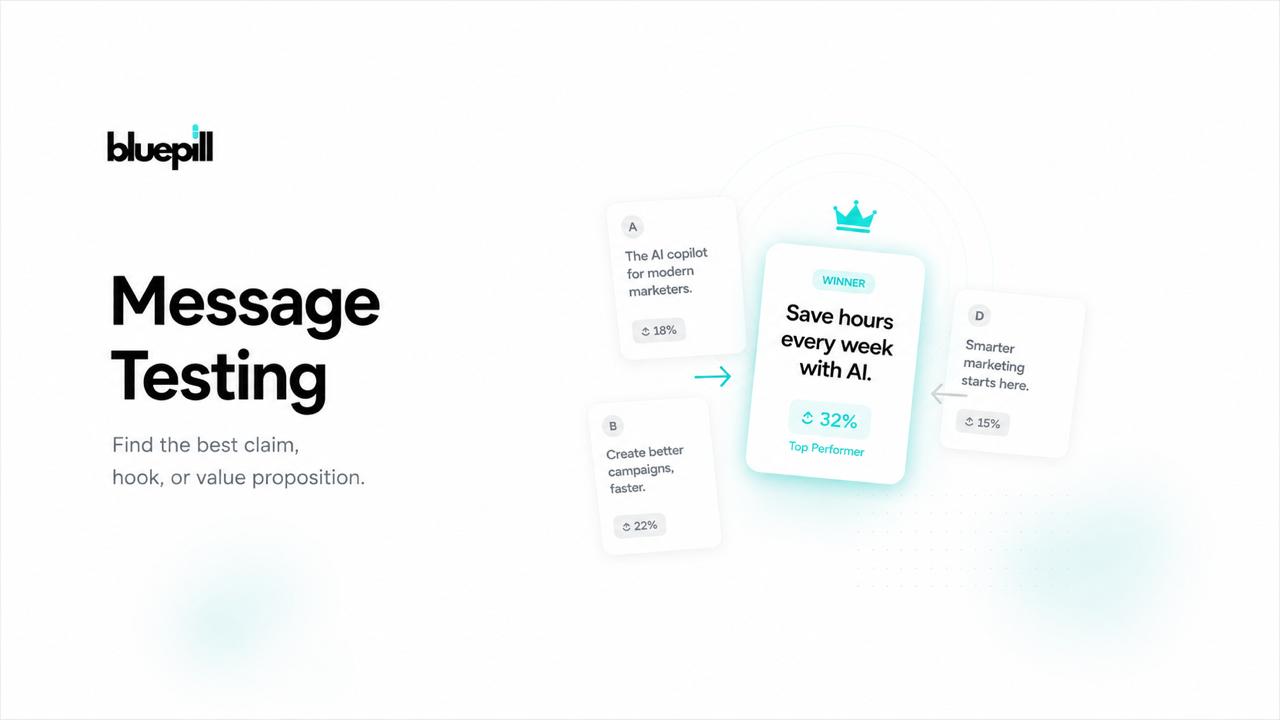
Message Testing: How to Find the Best Claim, Hook, or Value Proposition
May 29, 2026
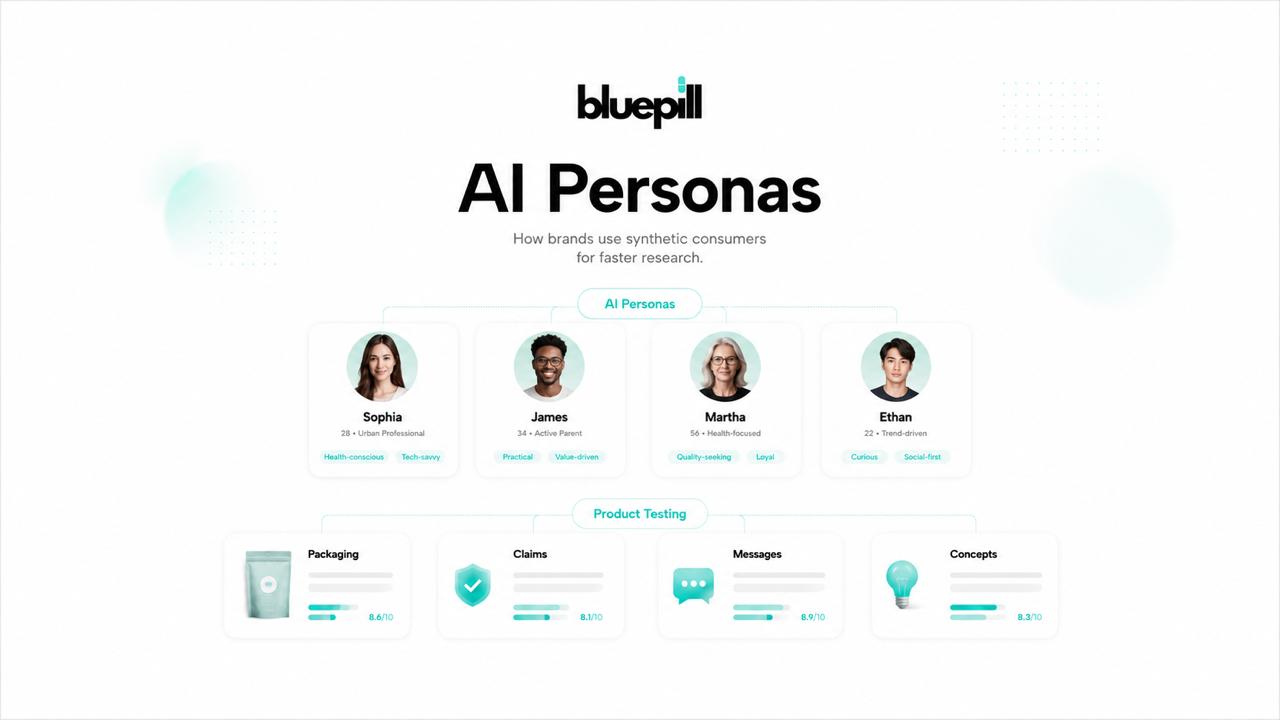
AI Personas: How Brands Use Synthetic Consumers for Faster Research

May 29, 2026
Advertising Market Research: How to Validate Ads Before Launch
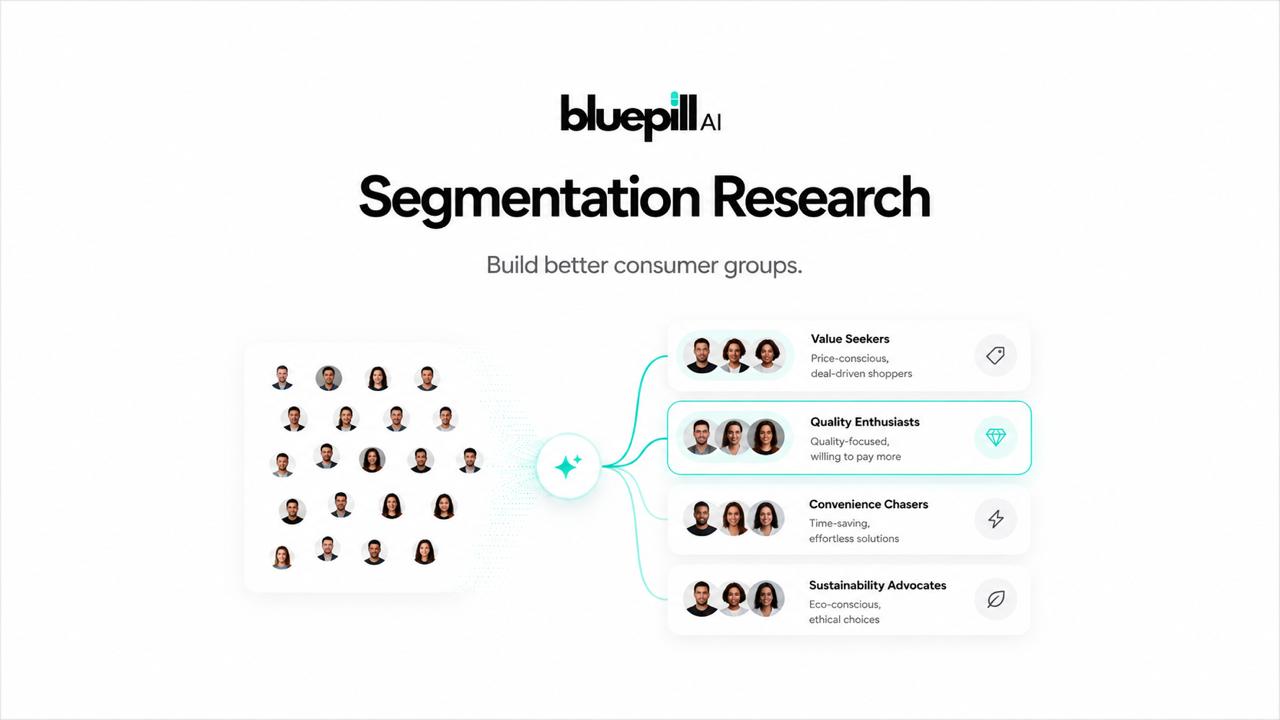
May 29, 2026