Negative buyer personas sharpen strategy by defining who NOT to target. See how to build them and pressure-test positioning with AI consumer panels.
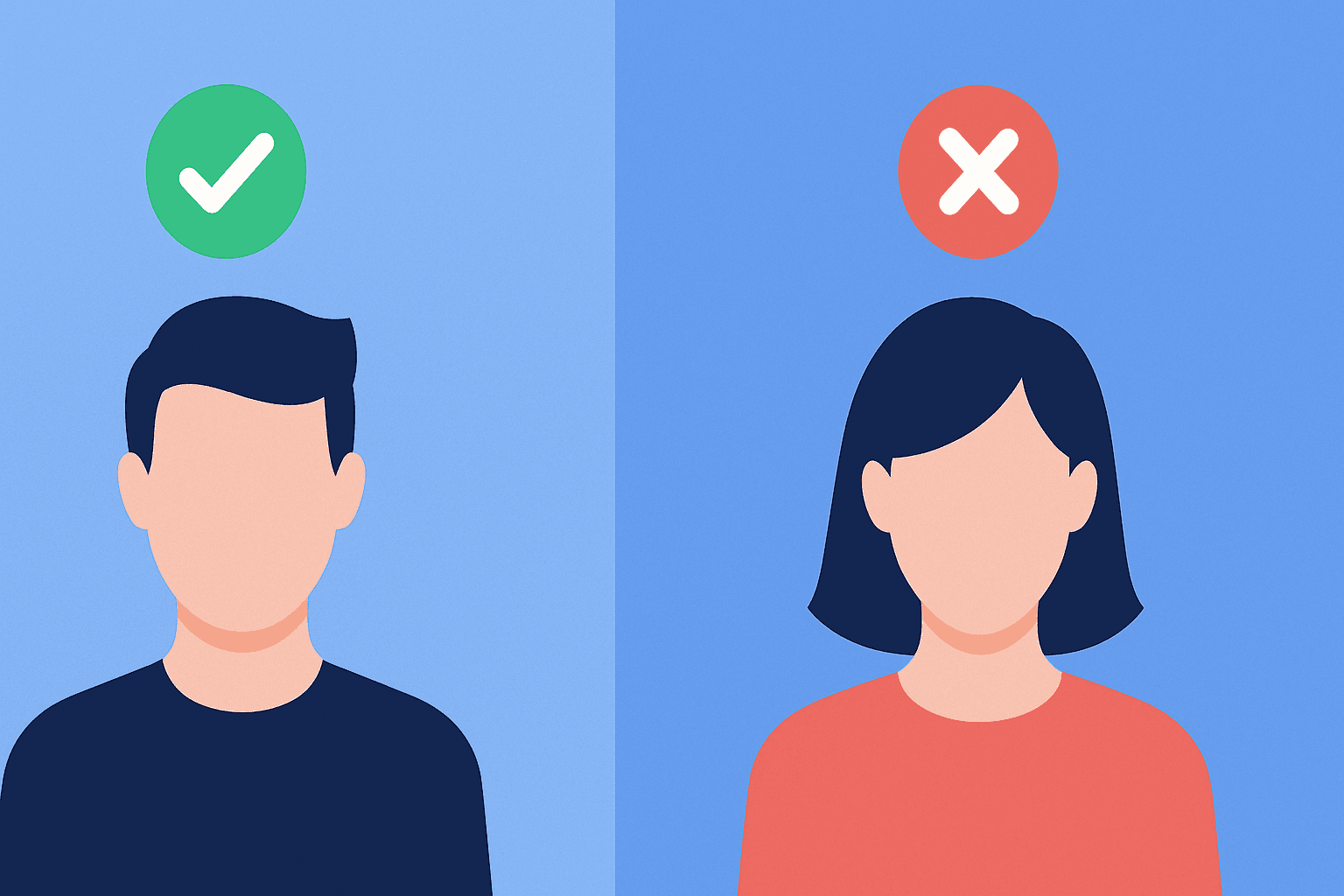
Most marketers obsess over ideal customer profiles. Very few put the same rigor into defining who shouldn’t see their ads, emails, or sales pitches. That’s where negative buyer personas (a.k.a. exclusionary personas) come in.
When you do this well, three things happen at once:
You stop burning budget on people who will never convert.
Your messaging gets sharper because it’s written for real buyers, not “everyone.”
You reduce churn by avoiding customers who were a bad fit from day one.
This article walks through what negative buyer personas are, how they improve ROI, and how you can use AI consumers from BluePill to build and validate them in days - not months.
What Are Negative Buyer Personas?
A negative buyer persona is a semi-fictional profile of people you don’t want as customers:
They look like your market from the outside…
…but their behaviours, constraints, or expectations make them a bad fit.
Typical signals for a negative persona:
Outside your service region or unsupported markets
No decision-making authority (students, interns, early-career roles)
Unrealistic price expectations or perpetual discount hunters
Chronic “tire-kickers” who engage with content but never move forward
Overly complex requirements that don’t match your product roadmap
Think of labels like:
“Penny-Pincher Paula” – Always clicks your ads, never buys unless there’s a heavy discount.
“Wrong Region Ryan” – Engages with your content but sits in a geography you don’t serve.
“Misfit Martech Mary” – Wants an all-in-one suite when you’re a focused point solution.
Your goal: document these profiles clearly enough that marketing, sales, and success teams all agree:
“If this person looks like that persona, we don’t chase them.”
Why Negative Personas Matter (Beyond “Efficiency”)
Most funnels leak in two places:
Top of funnel – You attract a lot of the wrong people.
Post-sale – You close poor-fit customers who churn fast and drain your CS team.
Negative personas directly attack both.
1. Sharper Targeting, Less Waste
Negative personas work like suppressive filters inside your audience definitions:
In paid: excluded audiences on Meta, LinkedIn, Google, programmatic
In lifecycle: conditional branches in flows for “do not nurture” segments
In outbound: prospecting rules for SDRs (who to skip)
This leads to:
Optimized ad spend – Fewer impressions on audiences that never buy
Higher relevance – Copy and creatives can speak to the real decision-makers
Cleaner data – Analytics aren’t polluted by behaviour from non-buyers
Instead of asking, “Who else can we add to this audience?” your team starts asking,
“Who should we remove?”
2. Lower Churn and Fewer “Problem Accounts”
Bad-fit customers don’t just churn—they create drag:
High support load
Low NPS and negative word-of-mouth
Constant discount requests and edge-case feature demands
When you embed negative personas into your acquisition strategy, you:
Reduce churn by filtering out customers who were never likely to succeed
Increase LTV by focusing on accounts that actually grow with you
Free up CS bandwidth to invest in expansion, not firefighting
How Negative Personas Lift Marketing ROI
Every dollar spent on a negative persona is a double loss:
It doesn’t convert.
It could have been used to reach someone who would.
By removing bad-fit slices of your audience:
CPA drops – Fewer wasted clicks and fewer unqualified leads
Conversion rates rise – Lead → opp and opp → closed-won both benefit
Time-to-learning shrinks – You test on the right audience faster
Over time, your funnel starts to look different:
Less noise at the top
More signal in the middle
More revenue at the bottom
That’s the mechanical ROI of negative personas: the same budget, reallocated to people who actually care.
Where AI Changes the Game: Meet BluePill
The challenge with personas—especially negative ones—is not the concept. It’s the speed and depth of insight:
Traditional research: 6–8 weeks, panels, surveys, focus groups
Stakeholder interviews: slow, subjective, often biased
Internal “guess personas”: quick, but fragile and unvalidated
BluePill turns this into a fast, iterative, AI-powered workflow.
AI Consumers as Your Research Engine
BluePill creates AI consumers that mirror your real audience using behavioural and market data. You can then:
Build AI audiences – Define segments by role, company size, market, behaviour
Test anything against them – Ads, landing pages, pricing, messaging, concepts
Get structured feedback – Summaries, tags, timestamped reactions, red-flag themes
Instead of waiting weeks for a research readout, you can get decision-grade signal in minutes.
Using BluePill to Build Negative Buyer Personas
Here’s a practical way to operationalize negative personas with BluePill.
Step 1: Start from Reality, Not Opinion
List segments that:
Have high churn
Never move beyond demo
Regularly ask for features you will not build
Pull basic data for each: role, company size, industry, region, ACV, behaviour.
Label them as “hypothesis negative segments.”
Step 2: Turn Them into AI Personas
Inside BluePill:
Create AI consumers representing these hypothesis segments.
Configure traits like:
Budget level
Decision authority
Tech stack sophistication
Purchase triggers & blockers
Now you have AI versions of your suspected negative personas.
Step 3: Stress-Test Your GTM Against Them
Run controlled tests where you show:
Current ad creatives
Landing pages and value propositions
Pricing and packaging narratives
to both:
Your core positive personas, and
Your hypothesis negative personas.
You’ll quickly see patterns like:
Negative personas consistently choose a cheaper competitor
They reject your positioning on specific dimensions (e.g., “too complex for us”)
They demand features you intentionally don’t want to build
This is where you confirm: “Yes, this is a negative persona. We should not optimise for them.”
Step 4: Codify and Deploy
Once validated, document each negative persona with:
Name + 1-line summary
Role, company profile, region
Behavioural signals (what they click, ask, complain about)
Go/No-Go criteria (when to exclude them)
Then plug these into your stack:
Paid media – Custom and lookalike exclusions
CRM / MAP – Fields and rules for routing or suppression
Sales playbooks – “If prospect = [Negative Persona], do X / do not do Y”
CS & RevOps – Flags for risky deals that should be pushed back on
Three High-Impact Plays for Decision-Stage Marketers
If you’re already at the consideration or decision stage with BluePill, here are concrete plays to run.
1. Clean Up Paid Search & Social
Use AI consumers to identify search terms and creative angles that attract bad-fit segments.
Add these to your negative keyword lists and audience exclusions.
Reinvest freed budget into proven high-fit segments from your AI testing.
Outcome: Lower CPA on core segments, more signal from every dollar spent.
2. Protect Your Sales Team’s Time
Feed historic “bad-fit” deals into BluePill and look for common traits.
Convert those traits into lead scoring penalties or disqualification rules.
Align this with sales leadership so reps are empowered to walk away earlier.
Outcome: Fewer dead-end opportunities, more attention on winnable deals.
3. Reduce Churn from Day 0
Map churned customers against your AI personas.
Identify which personas correlate most strongly with early churn.
Treat those as negative or cautionary personas and tighten acquisition rules accordingly.
Outcome: Healthier cohort LTV and a CS team that can focus on expansion, not rescue missions.
Bringing It All Together
Negative buyer personas aren’t a “nice-to-have segmentation exercise.” They are:
A budget protection mechanism
A churn-reduction lever
A clarity tool for marketing, sales, and product
AI-driven consumers from BluePill let you:
Build and validate both positive and negative personas at 100× the speed
Cut research costs dramatically
Make persona work continuous, not a one-off workshop
Related Blogs
May 29, 2026
Message Testing: How to Find the Best Claim, Hook, or Value Proposition
May 29, 2026
AI Personas: How Brands Use Synthetic Consumers for Faster Research

May 29, 2026
Advertising Market Research: How to Validate Ads Before Launch
May 29, 2026