Learn why marketing research matters before campaign launch, and how consumer brands can test messages, claims, ads, and audience reactions before spending media budget.
A campaign does not fail only because of poor media buying.
It can fail much earlier.
It can fail because the message is unclear.
It can fail because the claim is not believable.
It can fail because the audience does not care enough.
It can fail because the creative looks good internally but does not create action.
It can fail because the product benefit is real, but the campaign explains it poorly.
This is why marketing research matters before campaign launch.
Marketing research helps teams understand how consumers may respond before the campaign goes live. It helps brands test messages, claims, hooks, creative ideas, audience segments, and purchase barriers before spending heavily on media.
For consumer brands, this is especially important.
Campaign budgets can move quickly. Once the media is live, the brand is paying to learn in public. Sometimes that is useful. But if the core message is weak, the team may waste a lot of money before understanding what went wrong.
Modern marketing research helps teams reduce that risk.
In the AI era, teams can now test campaign ideas much earlier using AI consumer panels, synthetic personas, and behavioral simulations. This makes it possible to compare messages, understand objections, and improve creative direction before launch.
That is where BluePill helps.
BluePill lets brands ask AI consumers what they think about campaign ideas, ad messages, product claims, landing page copy, packaging, and purchase decisions. It helps marketing, brand, insights, and growth teams understand what consumers may notice, believe, ignore, or reject before the campaign goes live.
What Is Marketing Research in Marketing?
Marketing research in marketing is the process of understanding consumers, markets, messages, and buying behavior before making marketing decisions.
It helps teams answer questions like:
Who should we target?
What message will resonate?
Which claim feels believable?
Which creative hook creates interest?
What would make someone click, buy, or consider?
What objections may stop conversion?
Which audience segment is most likely to respond?
How should we position the product before launch?
Marketing research is different from simply looking at campaign performance after launch.
Performance data tells you what happened after the campaign was live.
Marketing research helps you understand what may happen before you spend.
Both are useful. But if a team waits until after launch to learn everything, the cost of learning can be high.
Why Campaigns Fail Before They Launch
Many campaign problems begin before the first ad impression.
The media plan may be good.
The targeting may be reasonable.
The creative may look polished.
The product may be strong.
But the campaign can still underperform if the consumer does not understand or care about the message.
Common pre-launch problems include:
The main benefit is unclear.
The claim sounds exaggerated.
The ad tries to say too much.
The audience is too broad.
The creative is memorable but not persuasive.
The message does not match the buying need.
The landing page does not continue the story.
The product feels interesting but not urgent.
The campaign speaks to the brand’s priorities, not the consumer’s priorities.
Marketing research helps identify these issues before launch.
This matters because once a campaign is live, teams often focus on optimizing bids, budgets, channels, and creatives. But if the core message is wrong, tactical optimization can only help so much.
Start With the Campaign Decision
Before running marketing research, teams should define the decision they need to make.
The goal is not to research everything. The goal is to reduce uncertainty around the campaign.
For example:
Which message should lead the campaign?
Which audience should we prioritize?
Which claim should we use?
Which creative hook should we test first?
Which product benefit should be most visible?
Which landing page message should we use?
What objections should the campaign address?
Is the campaign ready to launch?
A clear decision creates better research.
If the decision is about message selection, the research should compare message options.
If the decision is about audience priority, the research should compare segment reactions.
If the decision is about claim believability, the research should test clarity, trust, and proof.
BluePill helps teams run this kind of decision-led research quickly by testing campaign ideas with AI consumers before launch.
Test the Message Before the Media
A campaign message is the bridge between the product and the consumer.
It explains why the product matters.
If that bridge is weak, the campaign will struggle.
Message testing helps teams understand whether consumers find the message clear, relevant, believable, and motivating.
Good message testing asks:
What is the main idea consumers take away?
Is the message easy to understand?
Does the benefit feel relevant?
Does the claim feel believable?
What feels confusing?
What sounds generic?
What makes the consumer more interested?
What would make them ignore it?
This is especially important because teams often judge messages internally.
The founder may prefer the boldest claim.
The product team may prefer the most accurate explanation.
The agency may prefer the most creative idea.
The growth team may prefer the most direct response angle.
But the consumer decides what works.
BluePill helps teams test multiple messages with AI consumers, compare reactions across segments, and understand which message has the strongest chance of creating interest before launch.
Test Claims for Believability
Claims can make or break a campaign.
A strong claim can create trust and urgency.
A weak claim can create confusion.
An exaggerated claim can create doubt.
A generic claim can disappear in the category.
For consumer brands, claim testing is especially important in categories like CPG, beauty, food, beverage, wellness, healthcare, ecommerce, and personal care.
A claim should be tested for:
Clarity
Relevance
Believability
Differentiation
Proof needs
Purchase influence
Risk of confusion
Audience fit
For example, a claim like “supports gut health” may sound appealing, but consumers may ask what that really means. A claim like “clinically inspired skincare” may sound premium to some consumers and vague to others. A claim like “clean energy” may work only if the product makes the benefit clear.
BluePill helps teams test claims with AI consumers before using them in ads, packaging, landing pages, or retail materials. This helps teams understand which claims consumers believe, which ones need proof, and which ones may create confusion.
Test Creative Hooks Before Production
Many campaigns begin with several creative routes.
One may be emotional.
One may be functional.
One may be humorous.
One may be founder-led.
One may be problem-solution focused.
One may be comparison-led.
One may be lifestyle-led.
Each route may be valid, but not all will work equally well for the target audience.
Marketing research helps teams test creative hooks before investing in production or media.
Useful questions include:
Which hook gets attention fastest?
Which hook is easiest to understand?
Which hook feels most relevant?
Which hook creates curiosity?
Which hook connects to the product benefit?
Which hook feels too familiar or generic?
Which hook is most likely to make someone act?
BluePill can help teams compare creative hooks using AI consumers. This is useful before producing expensive assets or launching paid campaigns.
The goal is not to remove creative judgment. The goal is to make creative decisions more consumer-informed.
Understand the Audience Before Targeting
Targeting is not only a media setting. It is a strategic decision.
A campaign may underperform if the audience is too broad or if the message does not match the audience’s motivation.
For example, a healthy snack campaign may target “health-conscious consumers,” but that audience can include very different groups.
Some may care about protein.
Some may care about low sugar.
Some may care about clean ingredients.
Some may care about taste.
Some may care about convenience.
Some may care about family-friendly options.
The same message will not work equally well for all of them.
Marketing research helps teams understand which audience is most likely to respond and why.
BluePill helps by simulating reactions across AI consumer segments. Teams can test the same campaign message with different audience types and understand where the strongest response may come from.
This helps marketers avoid one-size-fits-all campaigns.
Identify Purchase Barriers Before Launch
A campaign should not only create interest. It should also reduce friction.
Before launch, teams should understand what may stop consumers from acting.
Common barriers include:
The product is not clear.
The claim is not believable.
The price feels too high.
The benefit does not feel urgent.
The brand lacks trust.
The product feels too similar to alternatives.
The consumer does not know when to use it.
The ad does not explain enough.
The landing page does not answer key questions.
Marketing research helps teams find these barriers early.
BluePill can help teams ask AI consumers why they would not click, buy, try, or consider a product after seeing a message or campaign idea. This gives marketers a chance to fix objections before launch.
Sometimes the best campaign improvement is not a better headline. It is answering the question consumers already have in their mind.
Test Landing Page Messaging
A campaign does not end at the ad.
If the ad creates interest but the landing page fails to continue the story, conversion can suffer.
Landing page research helps teams understand whether the page explains the product clearly, supports the claim, builds trust, and guides action.
Before launch, teams should test:
Does the hero section explain the value quickly?
Is the main claim believable?
Does the page answer obvious objections?
Does the copy match the ad promise?
Is the call to action clear?
What information is missing?
What would make consumers more likely to act?
BluePill can help teams test landing page copy and product messaging with AI consumers. This is especially useful for DTC brands, ecommerce brands, and campaign teams that depend on conversion quality after the click.
Test Campaigns by Segment
Average feedback can hide the real opportunity.
A campaign message may look average overall but perform very strongly with one segment.
For example:
A premium message may work best for quality-seeking consumers.
A convenience message may work best for busy parents.
A taste message may work best for snackers.
A science-backed claim may work best for skeptical buyers.
A price-value message may work best for trial buyers.
Marketing research should help teams understand these differences.
Instead of asking only “Which campaign is best?” a better question is:
Which campaign is best for which audience?
BluePill helps teams test messages, claims, and creative hooks across different AI consumer personas. This helps marketers identify which segment should be prioritized and how the campaign should be adapted.
Use Research Before A/B Testing
A/B testing is useful, but it happens after traffic starts.
That means the brand is paying to learn.
Marketing research can improve what goes into the A/B test.
Instead of testing random variations, teams can first use research to identify stronger hypotheses.
For example, BluePill can help answer:
Which claims are worth testing?
Which message is most likely to create action?
Which headline feels clearest?
Which audience has the strongest motivation?
Which objection should the page address?
Which creative hook deserves paid testing?
Then the team can run a better A/B test with stronger variants.
This makes performance testing more efficient.
Research does not replace A/B testing. It improves it.
Use AI Before Campaign Launch
AI consumer panels are especially useful before a campaign goes live.
With BluePill, teams can test campaign elements such as:
Ad hooks
Headlines
Claims
Product benefits
Landing page copy
Audience segments
Creative concepts
Offer language
Purchase barriers
Competitive comparisons
Brand perception
This helps teams learn faster and reduce avoidable mistakes.
For example, before launching a campaign, a team can ask AI consumers:
What is the main message you take away?
What makes this interesting or uninteresting?
What feels believable or unbelievable?
What would stop you from clicking?
What question do you still have?
Would this make you more likely to consider the product?
Who do you think this product is for?
These questions can reveal issues that may not be obvious internally.
When Human Research Still Matters
AI research is powerful for early campaign testing, but human research still matters.
Use human research when you need:
Final validation
Statistical confidence
Large sample measurement
Brand lift studies
Sensitive category feedback
Real ad exposure testing
In-market performance measurement
Post-launch campaign analysis
The strongest workflow is usually AI first, then human validation or in-market testing where needed.
AI helps teams improve the campaign before launch. Human research and performance data help validate what actually happens.
A Practical Pre-Launch Campaign Research Workflow
A simple workflow can look like this:
Start with the campaign goal.
Are you trying to drive awareness, consideration, trial, purchase, repeat, or signups?
Define the target consumer.
Who is most likely to care and what motivates them?
Test the core message.
Is it clear, relevant, and believable?
Test the claims.
Do consumers trust them and understand them?
Test creative hooks.
Which route creates the strongest interest?
Test objections.
What would stop consumers from acting?
Test landing page copy.
Does the post-click experience support the campaign promise?
Test by segment.
Which audience responds best?
Refine the campaign.
Improve weak areas before launch.
Validate in-market.
Use A/B testing, performance data, or human research to confirm.
BluePill supports the early and middle stages of this workflow by helping teams simulate consumer reactions quickly before launch.
Common Marketing Research Mistakes
One common mistake is testing too late.
If the campaign is already approved and the media is booked, research may only confirm problems the team no longer has time to fix.
Another mistake is asking only which ad people like.
Liking an ad is not the same as taking action.
Another mistake is ignoring believability.
A bold claim may get attention but fail if consumers do not trust it.
Another mistake is treating all consumers the same.
Different segments may respond to different messages.
Another mistake is relying only on performance data.
Performance data is valuable, but it explains what happened after launch. Pre-launch research helps improve what goes live in the first place.
How BluePill Helps Before Campaign Launch
BluePill helps marketing teams test campaign ideas before spending media budget.
Teams can use BluePill to understand:
Which message is clearest
Which claim feels believable
Which hook creates interest
Which audience responds best
What objections may appear
What landing page copy needs improvement
What consumers may misunderstand
What may increase or reduce purchase intent
This helps teams avoid launching campaigns based only on internal opinions.
For brand teams, BluePill improves positioning and claims.
For marketing teams, it improves message quality.
For growth teams, it helps create stronger test variants.
For insights teams, it gives faster consumer feedback before campaign decisions are locked.
Final Takeaway
Marketing research matters before campaign launch because it helps teams understand how consumers may respond before media spend begins.
It helps brands test messages, claims, creative hooks, landing pages, audience segments, and purchase barriers while there is still time to improve.
In the AI era, this process can happen faster.
AI consumer panels and behavioral simulations make it possible to test campaign ideas before launching them into the market.
BluePill helps brands bring this workflow into their campaign process.
It gives teams a faster way to understand what consumers may notice, trust, ignore, or question before the campaign goes live.
The best campaigns are not only well produced.
They are consumer-tested before the market tests them.
Related Blogs
May 29, 2026
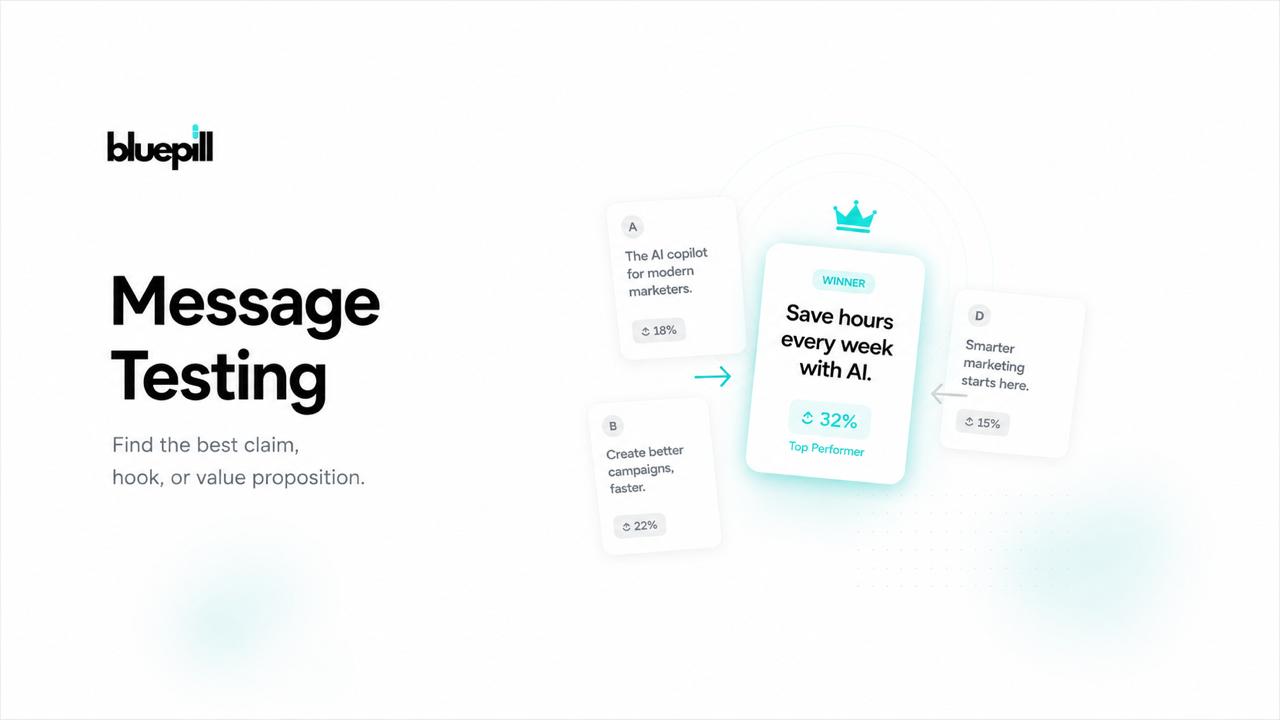
Message Testing: How to Find the Best Claim, Hook, or Value Proposition
May 29, 2026
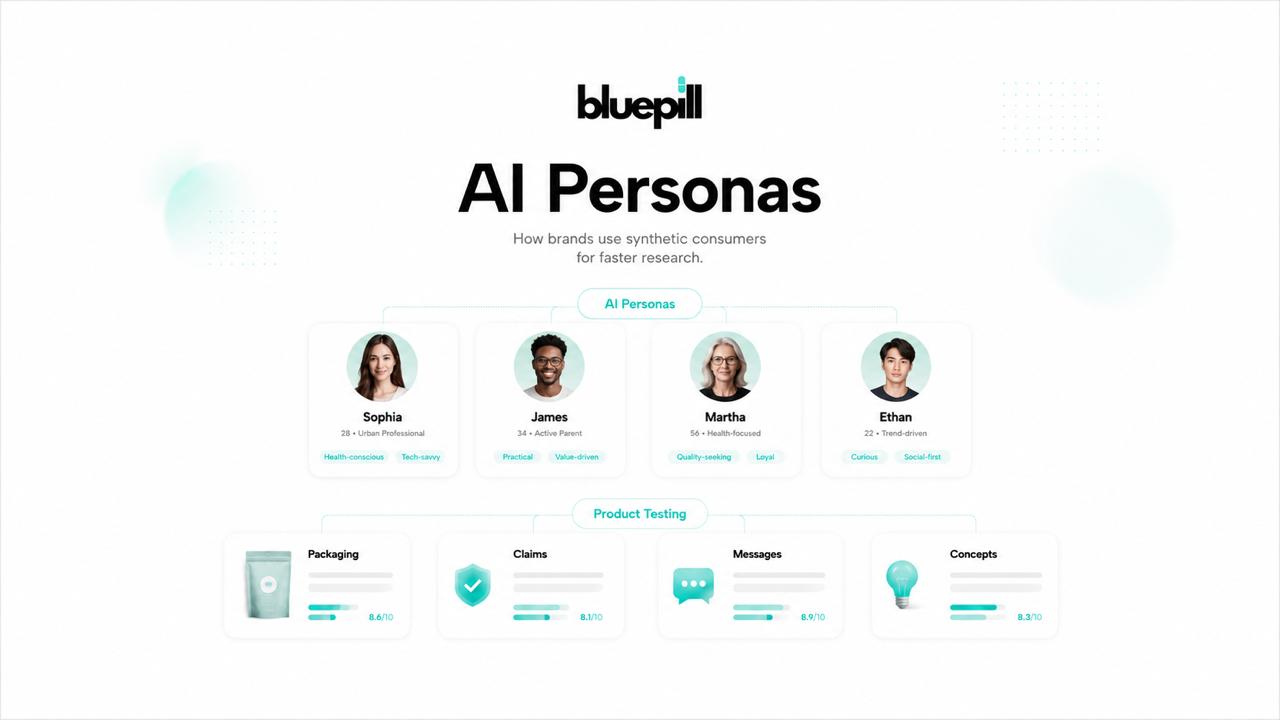
AI Personas: How Brands Use Synthetic Consumers for Faster Research

May 29, 2026
Advertising Market Research: How to Validate Ads Before Launch
May 29, 2026